ONE UPCOMING RELEASE
Prepare one AI workflow for release
For an AI workflow nearing release, APG can surface handoffs, exceptions, and checks before the team decides what is ready. The team keeps the release decision and next-step ownership.

ADAMS PRINCIPAL GROUP
APG helps teams make one workflow ready for judgment, ownership, and attention.
NORTHWEST PASSAGE
Start with one workflow: clarify what it does, who owns each step, and what needs attention.
MAKE IT MAKE SENSETHREE WAYS THE WORK TAKES SHAPE
ONE UPCOMING RELEASE
For an AI workflow nearing release, APG can surface handoffs, exceptions, and checks before the team decides what is ready. The team keeps the release decision and next-step ownership.
ONE RECORD TO CARRY FORWARD
Changing people or tools can break a decision record’s thread. APG is developing a way to keep evidence, decisions, and open questions together. The team decides what moves forward and what stays unresolved.
ONE DECISION TO PRACTICE
Before a difficult decision, something may be missing. APG is exploring a short browser exercise to surface the gap. The person keeps the final choice.
WHAT APG CAN SHOW NOW
See how APG examines one workflow without submitting or storing your information.
The same questions belong to everyone.
You don’t have to understand everything at once.
WHAT’S NEXT
With one workflow, decision, or problem that matters.
SHARE WHAT YOU’RE WORKING ON Opens an email to APG.You don’t need to have it figured out.
Washington surrendered authority by choice. Automated systems will surrender it only by design.
Secrecy may be necessary, but no secret custodian should control the entire inspection path.
Sometimes responsibility requires you to know something you cannot tell everyone else.
Silence may protect a military plan, an investigation, or a security system. But the moment information must be hidden, someone gains power over what others cannot see.
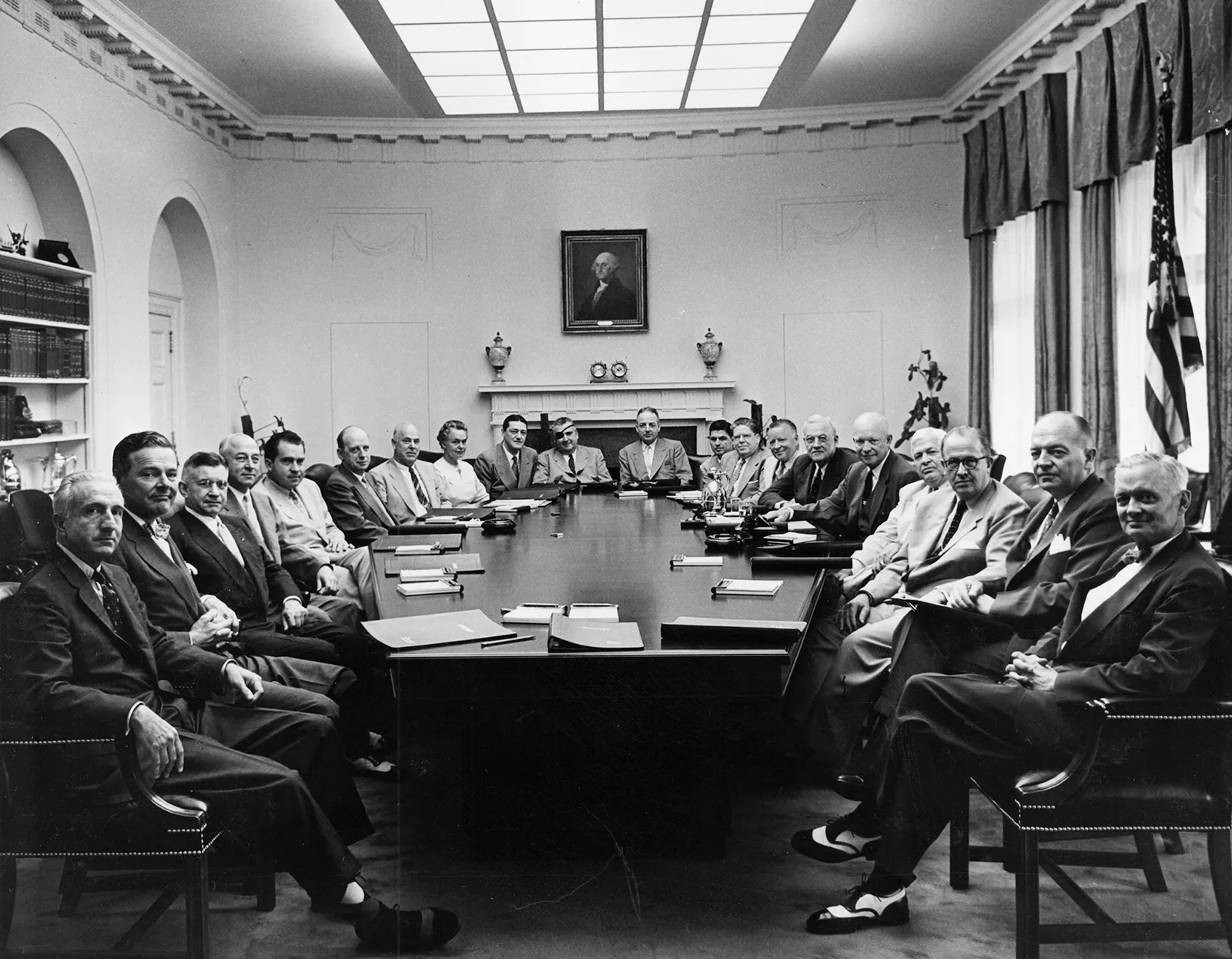
Eisenhower faced that pressure with the U-2 reconnaissance program. The United States needed reliable intelligence about Soviet military capability. The flights could help prevent surprise, but each one also risked creating a confrontation.
The CIA operated the program, but it did not possess unlimited authority to approve itself. Eisenhower retained responsibility for authorizing the flights. Before the 1960 mission that was shot down, he approved a limited operation for a limited period. The authority was not open-ended.
That arrangement did not make the operation harmless. It did not prevent the crisis that followed. But the people carrying out the secret mission were not the only people empowered to decide whether it should continue.
A secret may be protected from the public without being protected from judgment. Concealment may limit who can see the information. It must not eliminate the authority to inspect what was done under it.
The danger begins when the same role decides what stays hidden, what may be done in secret, and whether anyone else is allowed to review it.
What happens when the secret is held not by one official, but by a team, a vendor, or an automated system? A company may need a confidential investigation. A platform may need to conceal abuse signals. An automated system may need to protect security rules from people trying to defeat them.
In each case, the secret may be legitimate. But the people or systems holding it cannot control the entire explanation, inspection, and review path.
Reviewable concealment does not require every secret to become public. It requires someone outside the secret-holding role to possess real authority to inspect it, limit it, and act when its boundary is crossed.
So here is the test.
If the keeper’s permission is required to inspect, stop, or answer for the secret, the secret is not reviewable yet.
Eisenhower kept the final decision above the secret operation. That was a choice made by a person. A durable system cannot depend on every secret custodian making the same choice.
Keep what must be kept for a time. But even a necessary secret must answer to someone beyond the room where it is kept.
Public principles must be usable by people excluded from their original application.
It is one thing to write a promise. It is another thing to live as though the promise applies to everyone.
A country can place noble words in public and still deny them to the people standing closest to the wound.
Once a principle enters public life, people excluded from its original application may use it to challenge the institution that declared it.
A bell does not belong only to the hand that rang it. Once the sound enters public life, others may answer it with a claim of their own.
But repeating the promise is not enough. Claimability requires a real way to invoke it—a petition, appeal, hearing, review, or other process the institution is required to receive and answer.
The same tension appears in laws, organizations, platforms, and automated systems. A policy may promise fairness while giving excluded workers no meaningful appeal. A platform may publish principles of openness while denying affected users a process for challenging its rules. An automated system may promise safety while giving the people harmed by its decisions no way to invoke that promise against it.
The question is not whether the original author intended to include everyone. The question is whether the people left outside can turn the public promise into a claim the institution must confront.
Claimability means the excluded do not need the author’s permission to take a public principle seriously. They must be able to invoke it through a process that does not disappear when the claim becomes inconvenient.
So here is the test.
If people may repeat the promise but cannot use it to demand an answer, the principle is public in language only.
Jefferson helped place the promise into public life, but he lost the authority to decide who could claim it. His failure does not own the principle, and the principle does not excuse his failure.
A promise becomes public when the people once denied it can invoke it—and make the institution answer.
When the nearest protector becomes part of the danger, constitutional protection must have somewhere higher to go.
The authority closest to us is often the first place we turn for protection. A local officer. A nearby court. A government close enough to see the danger and act.
Sometimes that authority lacks the strength to protect people. But a deeper failure begins when it looks away, refuses to act, or starts shielding the people causing the harm.
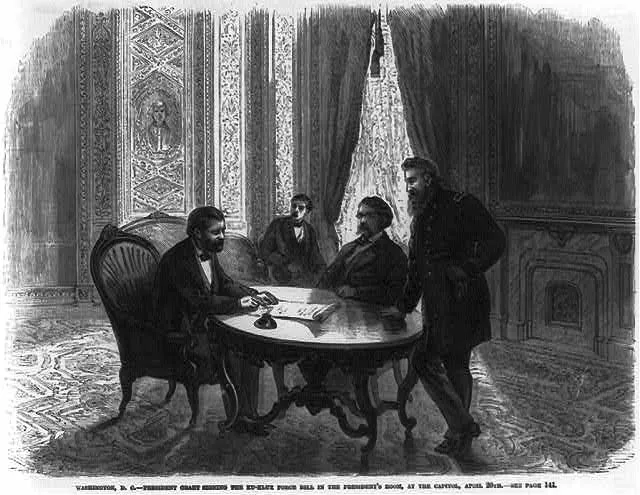
Grant faced that question during Reconstruction. The Ku Klux Klan used threats and violence against Black citizens and their allies. In many communities, local officers and courts did not merely lack resources. Some refused protection, tolerated the violence, or helped preserve the order behind it.
Congress responded with the Enforcement Acts, including the Ku Klux Klan Act of 1871. These laws gave the federal government authority to protect constitutional rights when local institutions could no longer be trusted to provide a lawful path to safety.
In South Carolina, Grant warned the Klan to stop. When the violence continued, he used federal authority. Troops, marshals, and the Justice Department moved against organized resistance and brought prosecutions.
Grant did not prove that distant power is always right. He showed that constitutional citizenship cannot depend entirely on an institution that has stopped providing trustworthy protection.
When the nearest authority becomes complicit, hostile, or incapable of offering a reliable path to relief, protection cannot remain there simply because responsibility began there. A higher jurisdiction must be able to step in.
The same danger appears beyond government. A company unit may protect its own manager. A platform may force harmed users to appeal to the same team that failed them. An automated decision system may send every challenge back through the same model, vendor, or process that produced the harm.
An appeal is not a backstop when the original authority still controls the evidence, the judgment, and the only available path to relief.
A constitutional backstop is not permission for permanent takeover. A higher authority should intervene for a narrow purpose: protect people, restore accountable order, and make trustworthy local protection possible again.
Direct intervention may recede when ordinary institutions can protect people again. But the larger duty cannot disappear. The backstop must remain available if the path below fails again.
So here is the test.
If every path to relief still returns the person to the authority that failed them, the constitutional backstop has not activated.
Grant’s intervention mattered because constitutional protection did not remain trapped at the level where it had failed. But a durable system cannot depend on finding a president willing to activate that protection at the right moment.
When the local shield becomes part of the danger, constitutional protection must already have somewhere higher to go.
Competence may justify temporary custody. It cannot justify permanent control.
Sometimes an institution carries responsibility because it has more experience, resources, or capacity.
That may justify holding control for a time. It does not make the work, the authority, or the future permanently theirs.
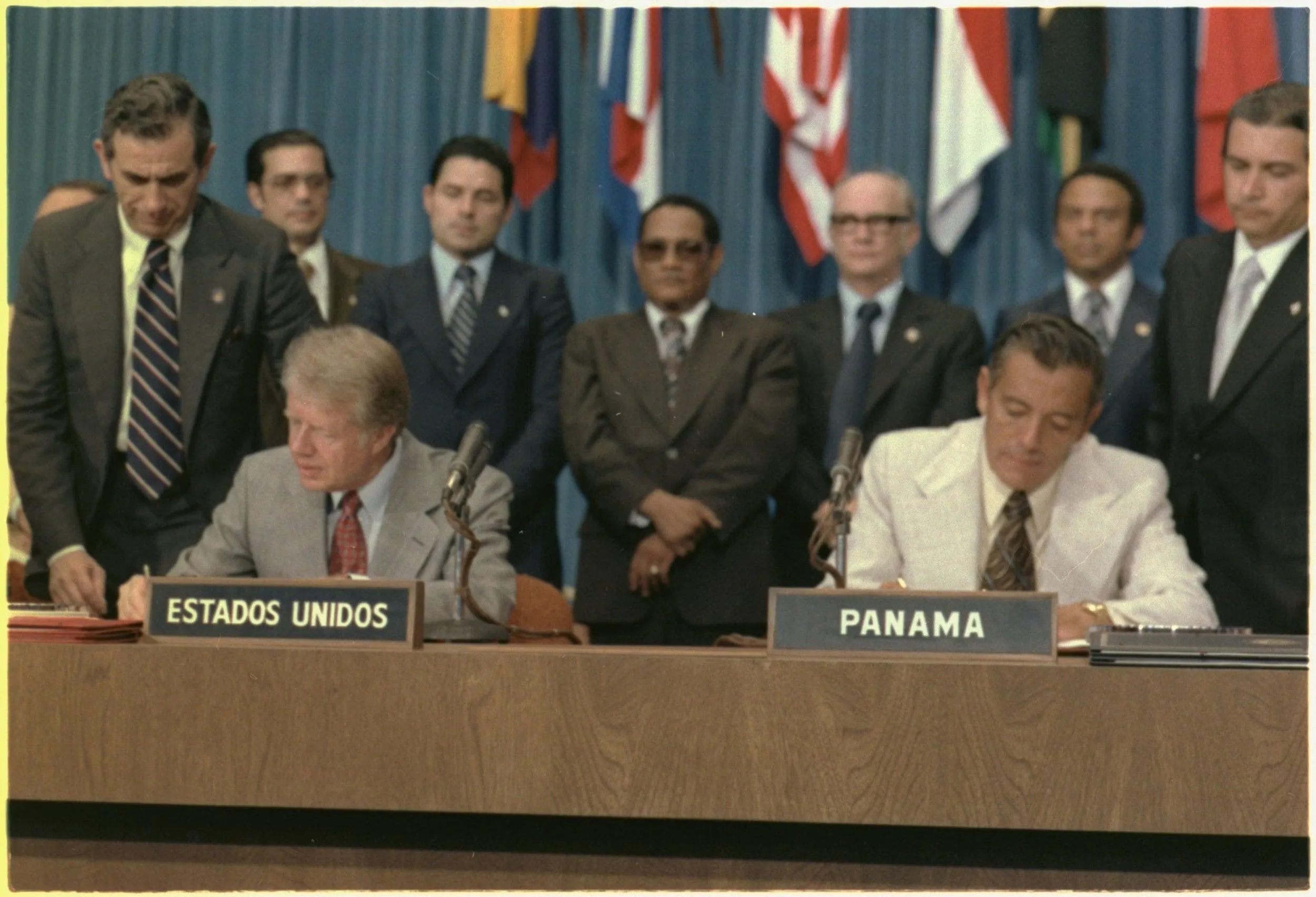
Carter faced that tension with the Panama Canal. For most of the twentieth century, the United States operated the Canal and controlled the Canal Zone, even though the waterway ran through Panama.
Panama was not merely a recipient of American help waiting to become capable enough to govern itself. The deeper question was whether American experience and control had become a permanent claim over authority that should ultimately belong elsewhere.
The Torrijos-Carter Treaties created a long, public transition. The Canal Zone ended in 1979. Responsibility was shared during the handoff. As Panama assumed more operational responsibility, American control receded according to a timetable, and full control passed to Panama at the end of 1999.
A handoff is not real merely because responsibility changes names. The knowledge, tools, access, and authority required to continue the work must move with it.
Giving someone responsibility while keeping the means of action elsewhere is not empowerment. It is abandonment with better language.
The same problem appears wherever an institution claims to transfer responsibility while keeping practical control. A public agency may ask a community to manage a program while retaining the budget and approvals. A platform may give users responsibility for their space while keeping the moderation tools, data, permissions, and appeal authority needed to govern it.
A person or community cannot carry responsibility through permission that may be withdrawn at any moment by the institution claiming to have stepped back.
Progressive custody requires control to change as real capability changes. It does not abandon people before they can carry the work, and it does not preserve unnecessary control after they can.
But transferring control does not erase every public obligation. The Canal treaties moved operational authority to Panama while preserving a continuing commitment that the waterway remain open and secure.
The same distinction applies elsewhere. Daily control may move outward while duties of protection, access, oversight, or accountability remain. Releasing control does not release responsibility.
So here is the test.
If control never recedes, custody has become ownership. If duty disappears before capability exists, the handoff has become abandonment.
Carter’s choice mattered because American competence did not become a permanent title to control. But durable institutions cannot depend on one leader voluntarily preparing the handoff.
Good custody prepares authority to move, capability to follow, and responsibility to remain where it is still owed.
Presidential direction and official resistance must both remain bound to public office rather than personal will.
There is a difference between serving a president and serving the presidency.
A president may give direction. An official may sometimes have to refuse. But neither command nor resistance becomes legitimate merely because the person delivering it feels certain.
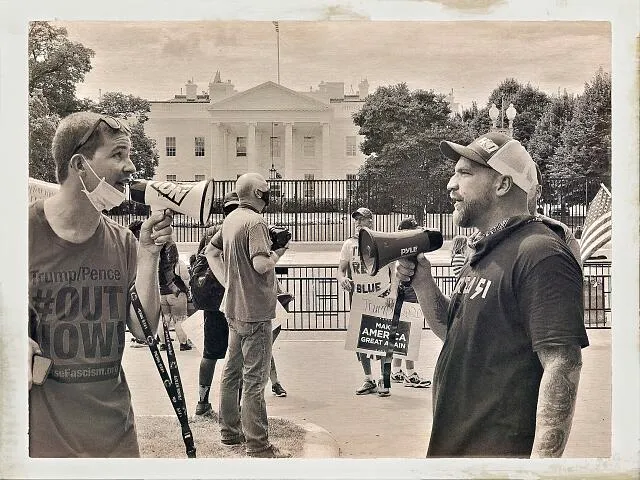
That tension became visible on January 6, 2021, when Congress met to count electoral votes. Trump pressed Vice President Mike Pence to reject or return disputed electoral votes rather than complete the count as Pence understood his role to require.
Pence was Trump’s vice president. But while presiding over the joint session, he also held duties that did not depend on Trump’s personal permission. In that moment, loyalty to the person and fidelity to the office no longer pointed in the same direction.
Pence concluded that the Constitution did not give him unilateral authority to decide which electoral votes should count. His refusal therefore rested on a claimed limit of the office, not on a private claim that his judgment mattered more than the president’s.
Requiring both command and refusal to answer through office does not make both claims equally lawful. It means neither claim is exempt from institutional judgment.
An official does not become righteous merely by resisting a president. A lawful refusal must come from authority attached to the role—not from the official’s private belief that they know better.
The same is true of presidential direction. A command is not made lawful by force of personality, anger, loyalty, or political necessity. The president must also be able to identify the public authority that permits the action.
A lawful refusal must do more than say no. It must identify the duty, preserve the reasoning, and submit the conflict to judgment beyond the two people involved.
Outside government, the office may be a delegated role, a published mandate, or a defined responsibility. A chief executive may demand action. A lawyer, engineer, moderator, safety lead, or public officer may believe the demand crosses a boundary.
An automated system creates the same danger when it turns a leader’s request into institutional action merely because the request came through an authorized account. Access to the system does not make personal will equivalent to public or organizational authority.
Office fidelity makes disagreement governable. It requires both sides to identify the role they occupy, the authority they claim, the limits they recognize, and the path by which their judgment can be tested.
So here is the test.
If command and resistance both point only to the people making them, the office has already begun to disappear.
Pence’s refusal mattered because he treated the office as something neither man owned. But a durable system cannot depend on one official finding the courage to say no at the decisive moment.
The presidency survives when command, refusal, and review remain attached to offices that outlast the people occupying them.
A grave decision needs a rival judgment strong enough to stand outside the preferred plan.
A dangerous decision becomes more dangerous when the leader hears only one serious judgment.
The preferred plan may be strong. It may even be right. But when that plan controls the evidence, the assumptions, and the terms of comparison, every alternative begins the contest already weakened.
Kennedy faced that danger during the Cuban Missile Crisis. American reconnaissance revealed Soviet missile sites in Cuba, and pressure grew for immediate military action.
An air strike or invasion promised speed and force. It also risked an escalation that could become impossible to control. Kennedy had to act, but acting too quickly could allow military preparation, institutional momentum, and presidential commitment to close every other path.
He convened the Executive Committee of the National Security Council, known as ExComm, and allowed competing judgments to develop before one course became operationally dominant.
The disagreement inside ExComm was not merely a menu of tactics. Advisers differed over the evidence, the risk of escalation, the likely Soviet response, and what responsibility required.
Some argued for air strikes and possible invasion. Others developed a naval quarantine, diplomatic pressure, and additional time for negotiation. A real rival judgment had to explain not only what else could be done, but why the preferred course might misunderstand the danger.
A second option is not a counterforce if the preferred plan still controls the evidence, assumptions, access, and terms by which every alternative will be judged.
Kennedy ultimately chose the quarantine while keeping diplomatic channels open. The process did not make the crisis safe. It made competing judgments visible before the decision became command.
Deliberative counterforce is not endless debate. It is not sabotage, ceremonial dissent, or delay performed to make a leader appear open-minded.
Its purpose is to ensure that the preferred judgment meets a serious rival while evidence can still be reconsidered, preparations can still be changed, and reversal remains possible. After that contest, the responsible leader must choose and own the consequences.
The same danger appears in organizations and automated systems. An AI team should not be allowed to propose a consequential deployment, define the evidence for success, control access to the evaluation, and decide whether the strongest objection has been answered.
So here is the test.
If the preferred plan designed, filtered, or dismissed its own opposition, the decision was never truly tested.
Kennedy’s process mattered because the preferred course did not control the entire field of judgment. But a durable system cannot depend on one leader voluntarily making room for serious opposition.
The strongest decision is not the one that merely welcomed resistance. It is the one that gave the right resistance standing before the path closed.
Responsibility should remain close, but larger obligation must activate before local limits become abandonment.
Responsibility is often strongest when it stays close to the people affected.
Neighbors see needs that distant offices miss. Local institutions may understand the people, history, and conditions better than anyone else.
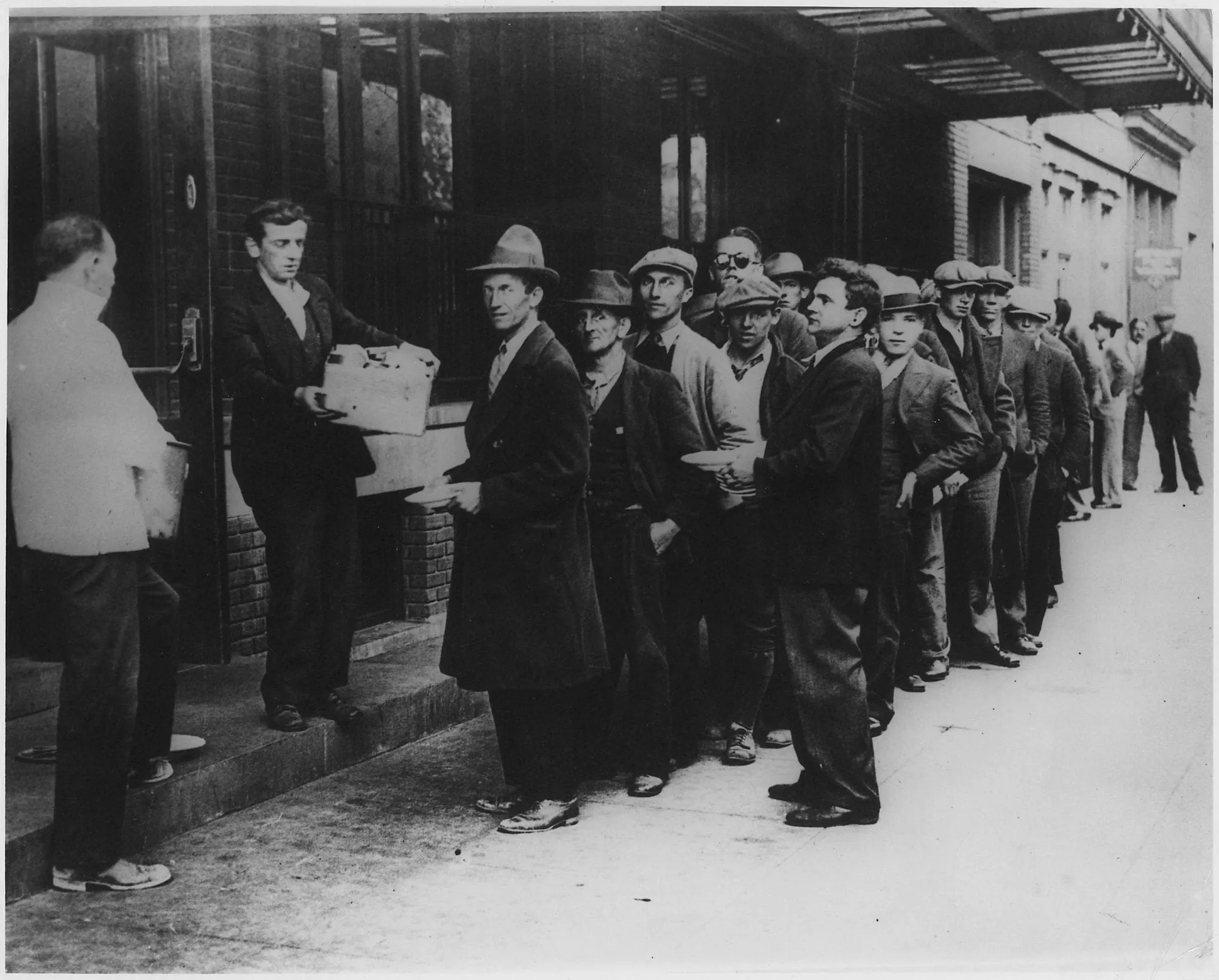
Hoover faced that question during the Great Depression. He expected employers, charities, local communities, and states to carry much of the relief effort while the federal government encouraged cooperation and supported recovery.
He did not simply stand aside. His administration organized unemployment relief, encouraged public works, supported emergency lending, and eventually expanded federal assistance.
But the crisis moved faster than the structure. Unemployment, bank failures, and hunger expanded while local charities, cities, and states lost the money, personnel, and reach required to respond.
Hoover’s failure was not his belief that local responsibility mattered. The failure was allowing larger obligation to remain too limited while the gap between local capacity and public need continued to widen.
A nearby institution may remain willing, legitimate, and deeply connected to the people it serves. But willingness cannot replace money, personnel, authority, infrastructure, or reach.
That does not always mean moving responsibility upward. The better response may be to move resources, authority, personnel, or technical support downward so the nearer institution can continue carrying the work.
Only when the work cannot responsibly remain below should the larger institution temporarily assume it. Subsidiarity does not require local institutions to perform duties they have been denied the means to fulfill.
The same problem appears after disasters, inside organizations, and across technological systems. A town may understand its families but lack emergency funds. A product team may understand its users but lack the engineers, budget, or authority required to correct a dangerous system.
Central leadership cannot praise local ownership while withholding the resources and permissions required to exercise it. Responsibility without usable capacity is not empowerment. It is abandonment disguised as restraint.
So here is the test.
If larger institutions preserve local responsibility while withholding the capacity required to carry it, subsidiarity has become an excuse for neglect.
Hoover’s failure was not faith in local responsibility. It was allowing larger obligation to remain optional while local capacity collapsed.
A durable system must detect the gap, activate support, and close it before people are forced to prove abandonment through suffering.
MISSION
How APG turns its mission into value, operations, relationships, and economic discipline.
Select any card to examine its other side.
Why APG exists
We are Adams Principal Group (APG). We are many. We are one.
Our mission is to prove that technology can leave people more capable and more self-governing.
APG rejects that tradeoff. Technology should strengthen people’s ability to understand, question, revise, refuse, exit, and govern the systems that act in their name.
This must be proven through conduct, not argument alone—by protecting the space in which people can judge, refuse, and become Citizens rather than merely 'users'.
Capability is not enough. Capability and self-governance must rise together.
CONSTITUTIONAL LAYER UNDER EVALUATION
Technological progress is often measured by speed, convenience, scale, and power. But greater capability is not enough when judgment and authority quietly migrate from the person to the system.
APG is evaluating whether a constitutional layer between human intention and artificial execution could:
STATUS
These are hypotheses under evaluation, not capabilities APG delivers today.
What APG offers
We keep Citizens in control before automation—no account required.
POSSIBLE FUTURE VALUE
CHIP turns chipping into bounded expeditions. An observation becomes a chip; an expedition gives that chip purpose and direction.
Future value may include:
STATUS
These are possibilities, not capabilities APG delivers today.
Who APG is testing with
We test what we build with independent professionals who rely on AI for serious work.
This is a pilot, not a proven market.
PILOT AND AUDIENCE HYPOTHESES
CURRENT PARTICIPANT HYPOTHESES
Citizens in the present pilot may be more likely to:
POSSIBLE FUTURE AUDIENCES
STATUS
These remain possible audiences, not validated customer segments.
What APG depends on
We build on clear principles, working software, and public work anyone can inspect.
Together, these support APG’s intended constitutional AI engine. That engine is not a delivered capability today.
POSSIBLE FUTURE REQUIREMENTS
Moving beyond the current product and pilot may require:
STATUS
These resources do not yet form a complete or validated product.
How APG reaches people
We reach Citizens through public writing, hands-on use, and direct outreach.
APG currently treats these as complementary pathways, not a sequence.
POSSIBLE FUTURE CHANNELS
APG may eventually reach more Citizens through:
STATUS
These remain hypotheses, not established channels.
What APG does
We build carefully, test thoroughly, and automate only with permission.
The work protects Citizen control instead of replacing it.
POSSIBLE FUTURE WORK
As the current product and pilot mature, APG may:
DEPENDENCY
These activities depend on what APG learns from its current product and pilot.
How APG earns trust
We earn trust by leaving final authority with the Citizen.
POSSIBLE RELATIONSHIP MECHANISMS
Future relationships may help Citizens:
GOVERNING BOUNDARY
Whatever mechanisms emerge, Citizens must retain final authority to accept, refuse, reconsider, or leave.
Who APG builds with
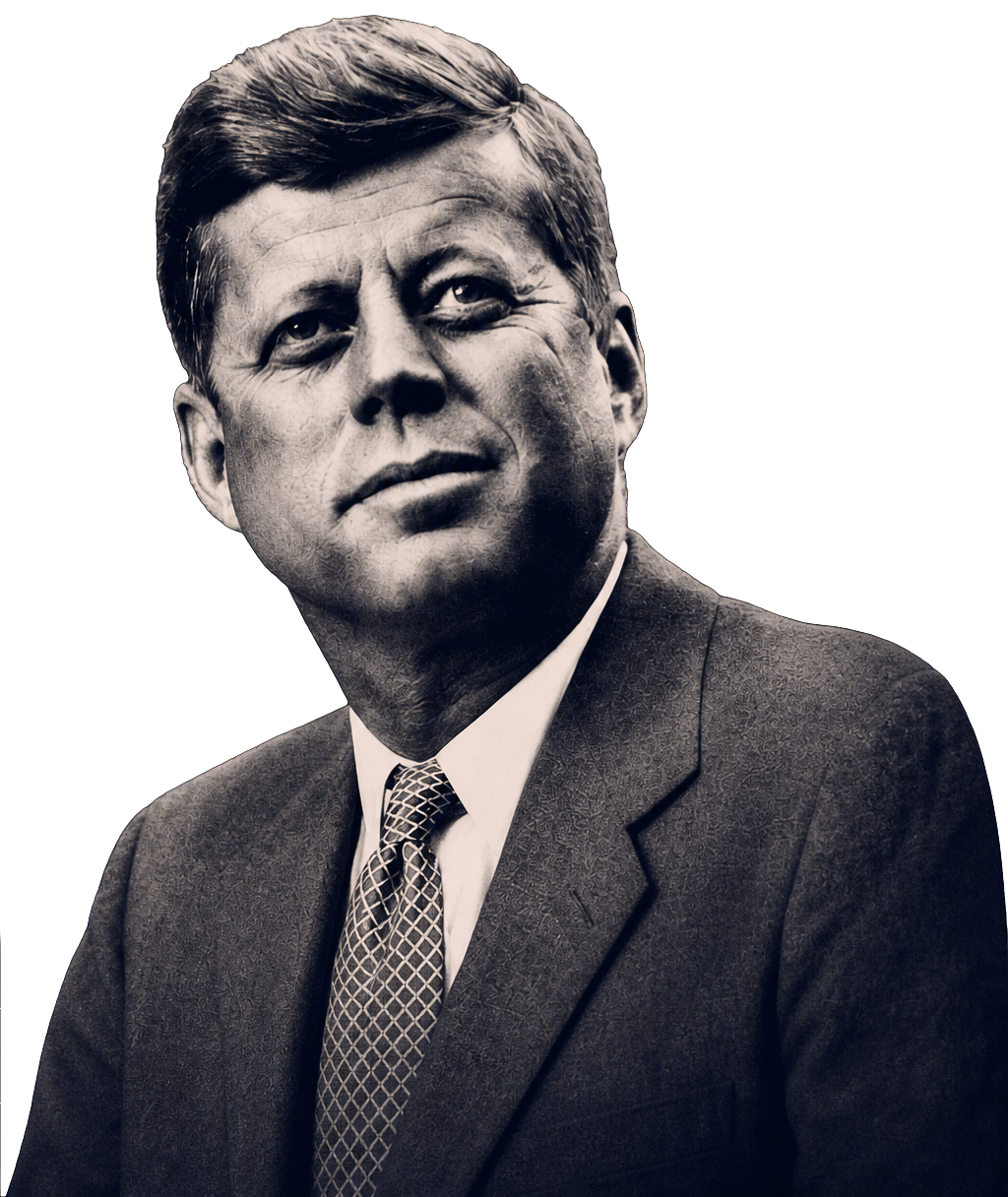
Ask not what your country can do for you — ask what you can do for your country.
John F. Kennedy, Inaugural Address, January 20, 1961
We are looking for partners and collaborators of all skills and levels who want to help build stronger forms of self-governance in the age of AI.
If the mission speaks to you, join the list and stay close as opportunities take shape.
APG grows through mission-aligned collaboration, not passive sponsorship.
ECONOMIC DISCIPLINE
APG separates how the work is financed from what the work costs.
How APG is financed
We have not proven a revenue model yet.
This finances development; it does not prove demand.
POSSIBLE REVENUE MODELS
APG may eventually earn through:
GOVERNING BOUNDARY
APG should earn from research, tools, and expertise—not from extracting attention, data, or authority from Citizens.
STATUS
None of these models is commercially validated.
What APG spends to sustain
We spend on research, software, accessibility, and public documentation.
POSSIBLE FUTURE COSTS
Future product, partnership, and institutional decisions may require:
SPENDING PRINCIPLE
APG should spend first on work that preserves Citizen capability, safety, portability, and long-term independence.
STATUS
These costs depend on future product, partnership, and institutional decisions.
CIVIC COMMITMENT
The canvas describes how APG operates. The mission defines what we are accountable to.
METHOD
APG locates authority, maps its boundaries and failure conditions, then turns the finding into a design others can test.
HISTORICAL PATH · ORGANIZATIONAL TRANSFER FOLLOWS
George Washington Portable Authority
01
ENTER THE PROBLEM
Historical discovery
Washington exercised military and presidential authority, then returned both. The office remained after its custodian.
What authority must remain unoccupied by the officeholder?
The tension
First locate the authority the system needs—and the authority no person may own.
METHODS Negative Space Thinking + Power Geometry
02
GENERALIZE THE DISCOVERY
Authority must attach for exercise and detach for succession.
Attachment enables accountable action; detachment preserves lawful succession when a custodian will not cooperate.
CLASS Architecture proposition
03
NAME THE GOVERNING RULE
Portable Authority
Authority may attach to the person. It must not become the person’s property.
Because it describes a relationship between person and role, the rule can travel beyond presidencies.
ROLE Doctrine
RESEARCH CLASS Control vector hypothesis
04
DESIGN FOR REFUSAL
What makes the doctrine operative when voluntary restraint fails?
GOVERNING RULE
Portable Authority
Authority may attach to the person. It must not become the person’s property.
PROTECTED CONDITION
Authority must remain releasable and lawfully reassignable.
APG calls this condition Required Release.
PROPOSED ENFORCEMENT MECHANISM
APG proposes an independent release-and-reassignment process capable of acting when a custodian refuses to leave.
An operative design names the trigger, independent authority, continuity, and reviewable record.
05
TEST THE RULE AGAINST BEHAVIOR
Washington relinquished military command and later left the presidency.
Attachment and release can coexist. Because Washington left willingly, the case does not prove that the office could compel release.
RECOGNITION SIGNALS · NOT A DIAGNOSIS
APG makes authority, escalation, review, transfer, and accountability explicit with domain experts. They set sector thresholds; the method does not replace them.
WORKING RECORD · PROBLEM-DEPENDENT
The record depends on the problem, evidence, and domain collaboration; nothing is automatic.
A reviewable model, not only an opinion: others can challenge, revise, and use it.
06
BOUND THE CLAIM
A willing custodian released authority; resistance remains unresolved.
Washington twice released consequential authority willingly.
Release must be independently triggered, continuous, and reviewable.
Institutional release against refusal or cross-domain validity.